How to choose a handmade ceramic mug that lasts
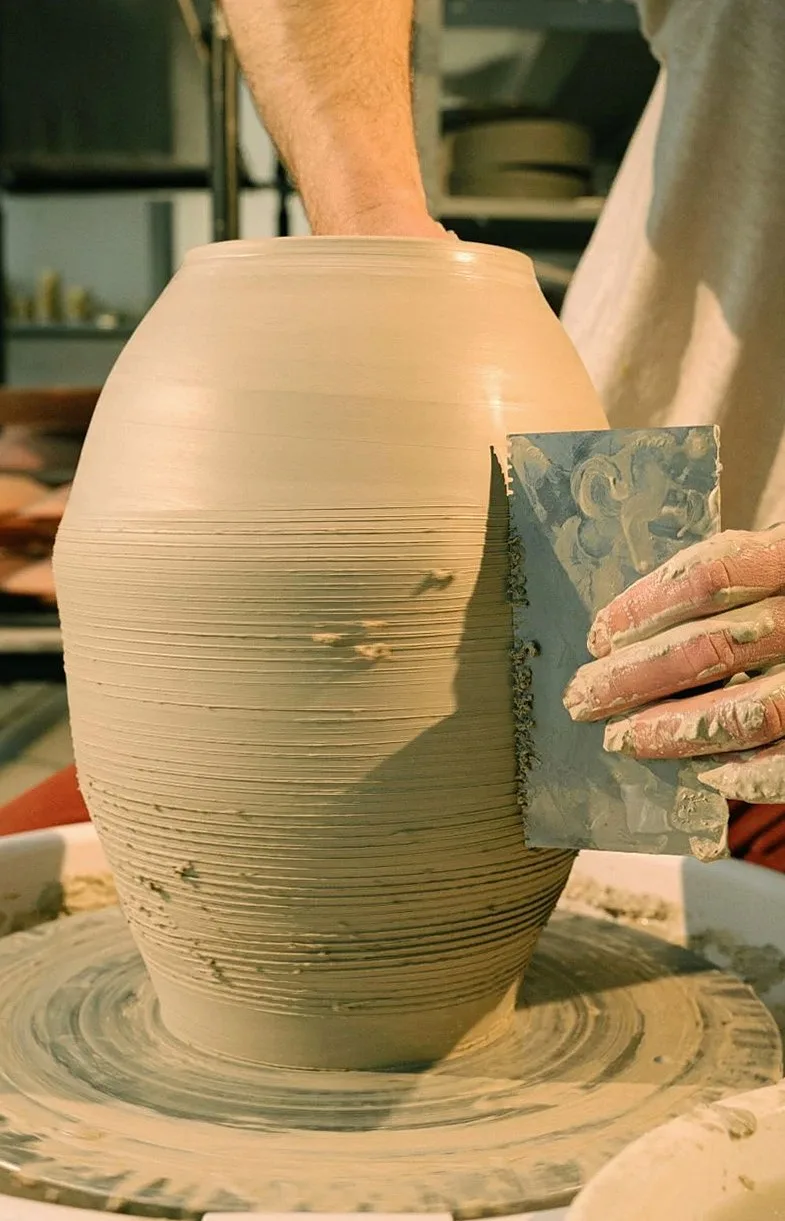
Most people pick a handmade mug because they like the look of it. That's a fine place to start, but it's not the whole picture. A mug that chips after three months, or one where the glaze crazes and traps moisture, is a disappointment regardless of how good it looked on the shelf. Here's what to actually look for.
Start with the clay body, not the glaze
Stoneware and porcelain are the two most common bodies for functional mugs. Stoneware is fired at high temperatures (typically 1250-1300°C) and produces a dense, non-porous result that handles daily use well. Porcelain is finer and more translucent, but it's also more brittle and less forgiving if knocked. For a mug you're going to use every morning, stoneware is usually the more practical choice.
Earthenware, fired at lower temperatures, is softer and more porous. It's common in decorative pieces but less ideal for a daily-use mug unless the glaze is applied thoroughly and fired correctly. If you're buying from a maker and you're not sure what body they use, it's a reasonable question to ask.
Check the glaze fit
Glaze fit refers to how well the glaze contracts and expands at the same rate as the clay body during firing and cooling. A poor fit shows up as crazing: a network of fine cracks in the glaze surface. On a decorative piece, crazing is sometimes intentional. On a functional mug, it's a problem, because liquid can seep into the cracks and the mug becomes harder to clean properly.
Run your fingernail lightly across the inside of the mug. A well-fitted glaze feels smooth and continuous. If you can feel or see fine lines, ask the maker whether the crazing is intentional or a firing variable. Most honest makers will tell you.
Wall thickness and weight
Thinner walls mean the mug heats up faster and cools down faster. Thicker walls retain heat longer but feel heavier in the hand. Neither is objectively better; it depends on how you drink. If you tend to nurse a coffee over 20 minutes, a thicker-walled mug keeps it warmer. If you drink quickly, a thinner wall is fine.
Hold the mug by the handle and check that the handle attachment points feel solid. On a wheel-thrown mug, the handle is pulled and attached separately. A good maker scores and slips the join carefully. A weak join is the most common failure point on a handmade mug, and it usually shows up after a few months of use.
Caring for a handmade mug
Most stoneware mugs are dishwasher safe, but repeated dishwasher cycles can dull a matte glaze over time. Hand-washing with warm soapy water keeps the surface looking its best for longer. Avoid soaking unglazed bases in water for extended periods; the raw clay can absorb moisture and, in cold conditions, this can cause small cracks.
If a mug develops a tea or coffee stain on the inside, a paste of bicarbonate of soda and a little water, left for 20 minutes, usually clears it without scratching the glaze.
The mugs currently on the shelf at Jasper Pinecone are wheel-thrown in a speckled buff stoneware body and fired to 1280°C. If you want to know more about how they're made before buying, come in and ask.